

From orchard to glass: what really happens when 100% orange juice is made

Healthy Eating Research report
10 de July de 2025
Agri-food exports from the Valencian Community grew by 8.7% from January to September, with a total value of €7.402 billion.
19 de December de 2025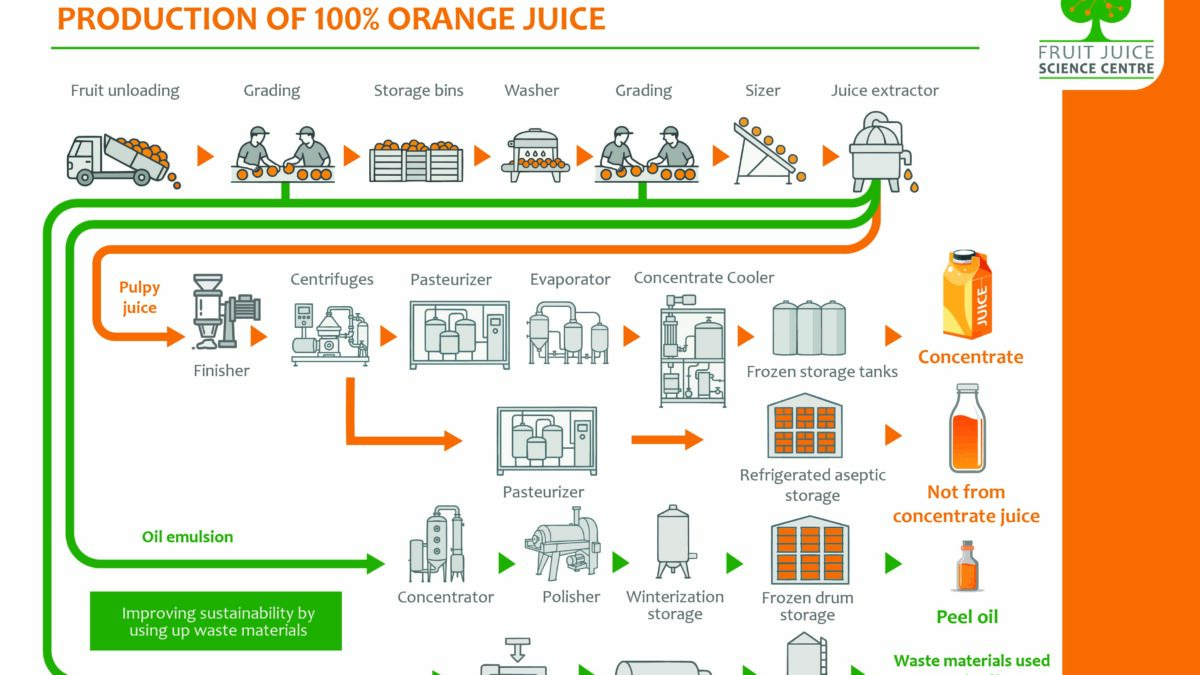
Behind every glass of 100% orange juice is a carefully controlled process designed to protect quality, safety, and the naturally occurring nutrients consumers expect — with a growing focus on using every part of the fruit responsibly.
At the same time, the Fruit Juice Science Centre Report 2025 highlights a major challenge facing the category today: consumer confusion, fuelled by conflicting advice and social media noise. In a new survey of over 8,000 Europeans, more than half said they feel exposed to contradictory health guidance, and fruit juice is one of the topics where myths are spreading fast.
What happens during the production of 100% orange juice?
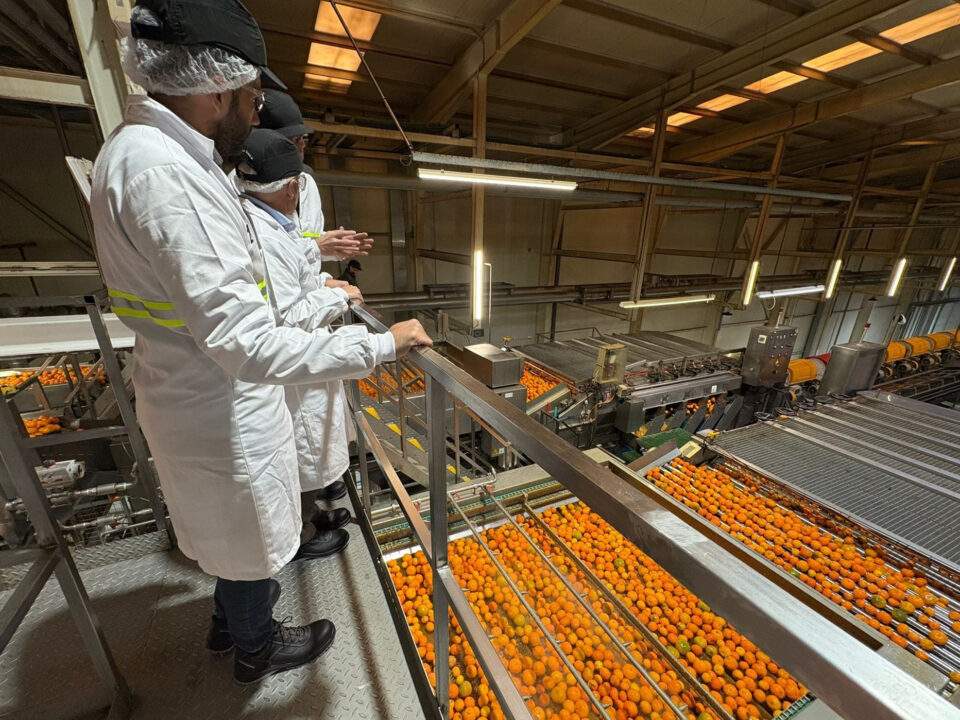
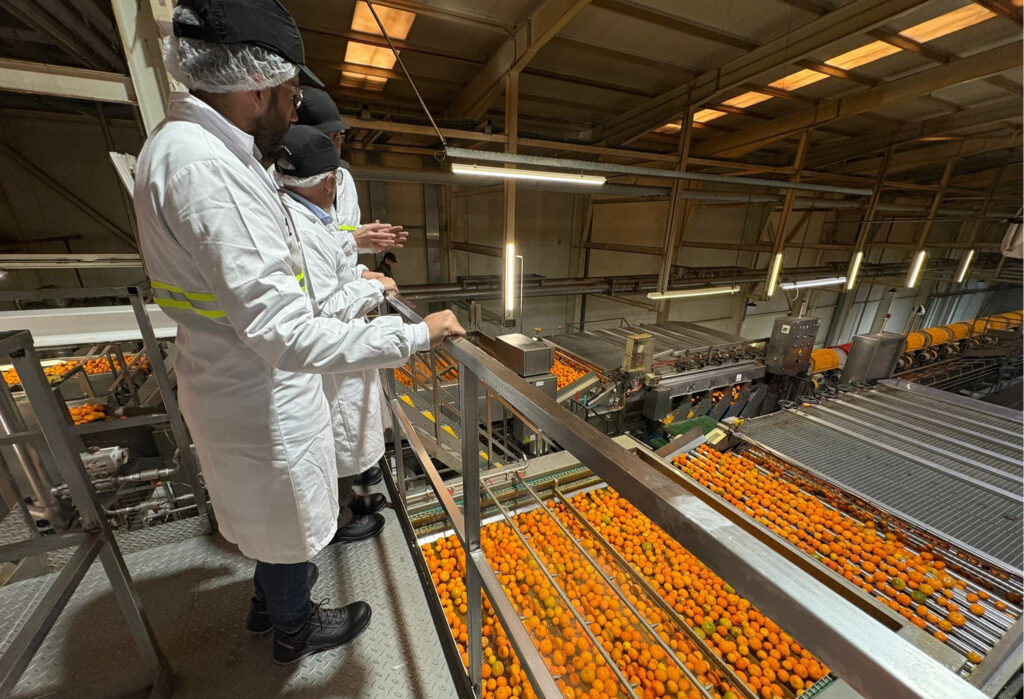
The journey begins when oranges arrive at the plant and move through a sequence of selection and preparation steps:
- Fruit unloading and intake
- Grading and quality checks
- Storage bins
- Washing
- Re-grading
- Sizing
- Juice extraction
After extraction, the “pulpy juice” can follow different routes depending on the final product format.
1) Not-from-concentrate (NFC) orange juice
For NFC juice, the focus is on stabilising the juice while keeping it as close as possible to its original state. This typically involves:
- Finishing steps (to reach the desired pulp level and consistency)
- Pasteurisation (to ensure microbiological safety and shelf stability)
- Refrigerated aseptic storage and packaging
2) From concentrate orange juice
For concentrate, the goal is to remove water so the juice can be stored and transported efficiently:
- Finisher and centrifuges (to refine pulp/solids)
- Pasteurisation
- Evaporation (water removal)
- Concentrate cooling
- Frozen storage tanks until reconstitution and packaging
Using more of the fruit: sustainability in practice
Modern orange juice production increasingly follows a “use-the-whole-fruit” approach:
- Peel oil can be recovered, refined, and stored as a valuable co-product.
- Wet peel, rag, and seeds can be pressed and dried, then stored for further use — including fibre ingredients (such as pectin) and animal feed.
This circular approach helps reduce waste and improves resource efficiency across the supply chain.
Key insights from the Fruit Juice Science Centre Report 2025
The 2025 report aims to address growing misconceptions — especially around sugar and processing — by combining survey findings with scientific evidence and expert commentary.
Myth 1: “100% juice has added sugar”
By law, 100% fruit juice does not contain added sugars or sweeteners, yet this myth remains widespread. In the survey, 38% of respondents believed 100% fruit juice contains added sugar — rising to 48% among 18–34-year-olds.
Myth 2: “It causes big blood sugar spikes”
Another common misconception is that 100% fruit juice causes significant blood sugar spikes. In the survey, 38% believed this to be true, and the report notes that 28% actively avoid fruit juice due to this concern.
What’s in a glass?
The report underlines that 100% orange juice can be a nutrient-dense choice when consumed in recommended portions:
- A 150 ml glass provides around 75 mg of vitamin C, which is over 90% of the recommended daily intake (80 mg).
- Orange juice also contributes folate and potassium, and contains polyphenols (notably flavanones such as hesperidin and naringenin).
- The report highlights research indicating commercial/industrial squeezing can yield higher polyphenol concentrations than home-squeezed juice.
How much do Europeans actually drink?
Despite concerns about overconsumption, the report points to a “perception vs. reality” gap:
- On average, European adults drink less than 70 g/day of fruit juice, and children less than 100 g/day (when including non-consumers).
- The report notes that recommended portions commonly sit around 100–200 ml/day, often framed as part of “5-a-day” guidance and typically advised with a meal.
What does the evidence say about health?
The report summarises research indicating that moderate consumption can fit within a healthy diet:
- A meta-analysis of 19 clinical trials found fruit juice intake was associated with a significant reduction in diastolic blood pressure.
- It also highlights evidence that up to 200 ml/day may support cardiovascular markers (such as blood vessel function, blood pressure, and inflammatory response), and reports no clinically significant negative impact on obesity/metabolic markers/type 2 diabetes risk unless overall calorie intake exceeds expenditure.